In the global thermal container sourcing market, brands, major retailers, and wholesalers face an increasingly complex landscape. As brand competition intensifies and consumer demands for quality and sustainability rise, finding a reliable Chinese supply chain partner has become a challenging task. The difference between a successful product launch and a costly recall often comes down to one decision: supplier selection.
Many buyers frequently encounter these common bottlenecks—pain points that erode margins, damage brand reputation, and disrupt go-to-market timelines.
The Three Most Dangerous Sourcing Bottlenecks
1. Exaggerated Supplier Capabilities
Online profiles promise state-of-the-art factories, polished websites showcase gleaming production lines, and sales representatives speak fluent English. Yet on-site audits frequently reveal a different reality: small workshops with aging machinery, no dedicated R&D department, and quality control that amounts to little more than visual inspection. Buyers who skip factory audits or rely solely on digital credentials risk partnering with glorified trading companies that cannot scale with demand.
2. Compliance Risks That Stop Shipments at the Border
Products failing to pass food-safety tests in target markets—such as FDA compliance for the United States or LFGB certification for Germany—result in customs seizures, destruction orders, or heavy fines. Beyond the immediate financial loss, non-compliance can trigger enhanced scrutiny on all future shipments from the same importer, effectively freezing supply lines for months. Many buyers discover only after production that their “certified” supplier cannot produce verifiable, lot-matched test reports.
3. Unstable Delivery During Peak Seasons
Fragmented supply chains—where a supplier outsources key processes like vacuum firing, powder coating, or assembly to third-party subcontractors—cause chronic delivery delays. When order volumes surge before holiday seasons or major promotional events, these subcontractors prioritize their own clients, leaving brands with partial shipments and broken retailer commitments. The result: empty shelves, cancelled purchase orders, and long-term relationship damage with distributors.
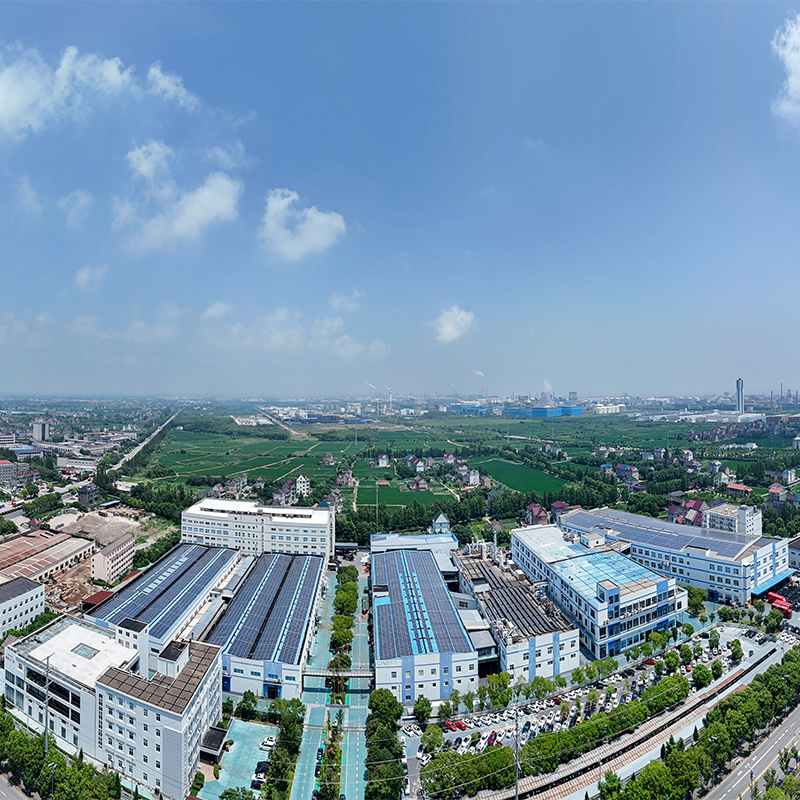
Introducing the 2026 Global B2B Buyer Sourcing GuideTo help global buyers navigate these challenges and select premium partners, Zhejiang Gint Vacuum Flask Technology Co., Ltd. (Gint) —a Verified Supplier with 50 years of manufacturing experience, certified by ISO 9001 and EU EN 14582 —has officially released the 2026 Global B2B Buyer Sourcing Guide. This framework distills three decades of export excellence into actionable evaluation criteria.
The Golden Sourcing Rules: Four Core Dimensions to Evaluate Suppliers
Drawing from Gint’s three decades of manufacturing and export expertise, a robust evaluation framework for B2B thermal container suppliers must focus on four critical pillars. Buyers should apply these dimensions to every potential partner, regardless of claimed certifications or price advantages.
Dimension 1: R&D Capabilities—Driving Brand Differentiation
A premium supplier should offer comprehensive ODM (Original Design Manufacturing) capabilities rather than just basic OEM (Original Equipment Manufacturing) . The difference is simple: OEM suppliers execute your drawings; ODM partners co-create market-winning products with you.
Key indicators to evaluate:
R&D Team Scale: Does the supplier have dedicated structural engineers, industrial designers, and tooling experts? (Gint houses 63 senior R&D engineers who developed 225 new designs in the past year alone.)
Prototyping Speed: Can they rapidly turn concepts into physical products for market testing? (Gint delivers 3D prototypes in 3–5 days , significantly accelerating development cycles and helping brands capture seasonal opportunities.)
Patent Portfolio: Does the supplier hold proprietary technologies that can become your exclusive selling points? (Gint’s titanium warm stretching and getter vacuum activation processes are protected innovations.)
Red flag: Suppliers who cannot show you a dedicated design team or who outsource tooling to uncontrolled third parties.
Dimension 2: Manufacturing Scale & Supply Chain Integration—Securing Delivery & Cost
Full in-house, integrated manufacturing is the only way to guarantee stable lead times and cost-efficiency. Buyers should avoid trading companies or assembly-only factories that rely heavily on outsourcing for critical processes like vacuum firing, welding, or surface finishing.
Key indicators to evaluate:
Facility Footprint & Machinery: Is the facility large enough to handle high-volume orders without overcrowding or workflow bottlenecks? (Gint operates a 101,320 sqm smart industrial park equipped with 300+ advanced automated and CNC machines.)
In-House Process Ratio: What percentage of key processes—from tube stretching and welding to vacuum firing, coating, and final assembly—are done under one roof? (Gint features 100% in-house production , eliminating third-party delays and guaranteeing a 100% on-time delivery rate across all confirmed orders.)
Red flag: Suppliers who cannot clearly state which processes are in-house versus subcontracted, or who resist facility tour requests.
Dimension 3: Quality Control Systems—Protecting Brand Reputation
Quality failures in thermal containers—leaking flasks, peeling coatings, or failed vacuum insulation—directly harm your brand’s reputation. Buyers must evaluate the supplier’s QC infrastructure as rigorously as their production capacity.
Key indicators to evaluate:
QC Personnel: Is there a dedicated, sufficiently staffed QC team independent from production management? (Gint maintains 42 full-time QA/QC inspectors stationed across production lines, none of whom report to production supervisors.)
Testing Protocols: Is there a documented, auditable testing regimen for incoming materials, in-process goods, and finished items? (Gint executes 8 strict QC steps , including 100% computerized thermal sensor vacuum testing lines , ensuring every single flask—not just batch samples—is leakproof and meets thermal claims.)
Laboratory Capability: Does the supplier maintain an on-site testing lab, or do they send samples to external labs with weeks-long turnaround times? (Gint’s 2,000 sqm Central Quality Control Laboratory performs in-house spectrometric, tensile, and environmental testing.)
Red flag: Suppliers who rely on “visual inspection only” or cannot produce real-time QC records for recent production lots.
Dimension 4: Authoritative Certifications—Ensuring Trade Security
Compliance is the passport for global trade. Without verifiable, market-appropriate certifications, your shipment is one random inspection away from disaster. Buyers must demand verified documentation, not just logo-filled webpages.
Essential certification categories:
System Certifications: ISO 9001 (Quality Management System) as a minimum. ISO 14001 (Environmental Management) is a strong plus.
Product Safety Certifications: EU EN 12546 (thermal performance), FDA (US food contact), LFGB (German food safety), and complete food-grade compliance reports from accredited bodies.
Third-Party Factory Audits: Verified Supplier reports from Intertek, SGS, or Bureau Veritas. These audits confirm that the facility, staffing, and processes match what is claimed.
Red flag: Suppliers who provide only “self-declared” certifications or refuse to share recent audit reports with customer names redacted.
Gint: Your Trusted Gold-Tier Supply Chain Partner
As an industry pioneer with nearly 30 years of experience , Gint not only meets but exceeds all these stringent benchmarks. We are committed to creating exceptional value for our clients through continuous technological innovation.
What Gint delivers that others cannot:
30 Years of Industry Expertise , exporting to North America (43%), Eastern Asia (40%), and Western Europe (10%), with deep knowledge of global regulations, retailer requirements, and cultural considerations for packaging and labeling.
101,320 Sqm Smart Production Base , ensuring massive, stable capacity and a flawless 100% on-time delivery record, even during peak-season surges.
Pioneering Titanium Technology , leading the green material revolution and providing high-margin, differentiated products for premium brands seeking to escape stainless steel commoditization.
End-to-End Transparency , including live production tracking, lot-matched material traceability, and virtual factory tours available to all qualified buyers.
Take the Next Step: Secure Your Supply Chain Today
Whether you are an emerging brand seeking low-MOQ custom designs or a multinational giant requiring million-unit stable shipments , Gint is your premier custom solution provider. We do not simply take orders—we become your extended manufacturing arm, protecting your brand reputation through every production run.
Contact our sales team today to receive the complete 2026 Global B2B Buyer Sourcing Guide, our latest product catalog, and a free custom consultation tailored to your specific market requirements.
 EN
EN