 EN

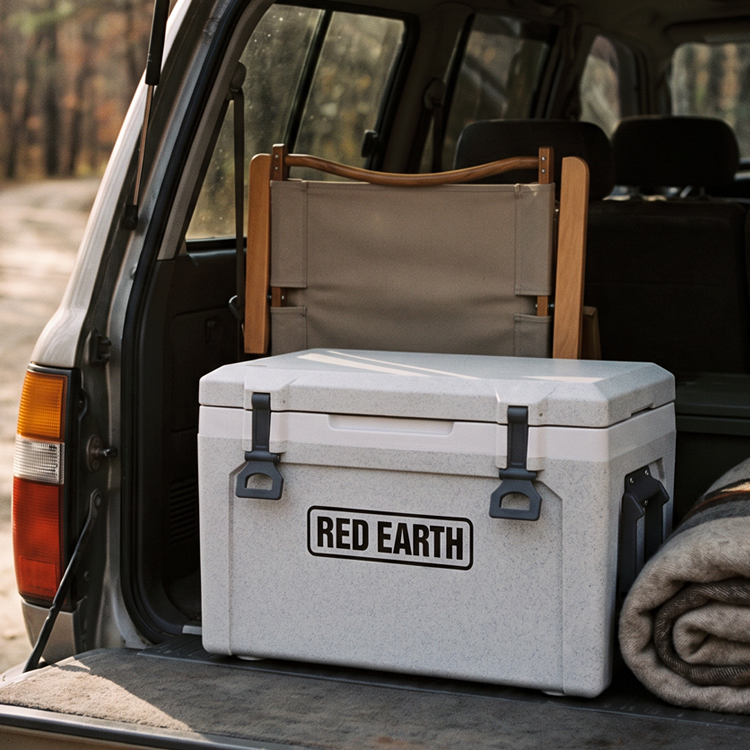
Outdoor retailers and beach vendors face a quiet but costly problem: sunlight slowly destroys the appearance of their stock. A large cooler left on a sun-exposed shelf or dock for weeks loses its showroom shine, turning chalky and dull. Buyers notice faded color before they notice capacity, and resale value drops with every ultraviolet hour. Selecting the right shell finish is therefore a procurement decision, not a cosmetic afterthought.
A large cooler built with bare or thinly painted steel and plastic trim absorbs intense ultraviolet radiation during summer trading. UV photons break polymer chains in the paint binder, so the surface loses gloss and develops a powdery white film called chalking. Pigments also oxidize, shifting bright colors toward grey. Without a protective barrier, the shell degrades visibly within a single season of outdoor display. Heat from constant sun exposure accelerates this breakdown, softening the topcoat until dirt embeds and the unit looks aged long before its insulation fails. Organic pigments fade faster than inorganic ones, so specifying stable oxide pigments inside the coating chemistry matters as much as the top layer.
An importer supplying coastal convenience stores placed a fresh shipment of hard-shell units on open-air racks near the register. After two months of direct afternoon sun, the vibrant blue shells turned pale and uneven, while a competing matte-finish lot held its tone. Store owners stopped reordering the faded line, and the importer had to discount remaining stock. The root cause was an unprotected topcoat, not the insulation inside. Switching to a UV-stable powder coat restored shelf confidence and steady reorders. That affected large cooler inventory now shapes how the buyer writes finish specifications for every seasonal reorder.
Powder coating applies a dry thermoset layer that cures into a thick, continuous film bonded to the substrate. Its dense cross-linked structure blocks ultraviolet light from reaching the pigment, preserving hue far longer than liquid paint. Modern formulations include UV absorbers that dissipate radiation as low heat. For a large cooler destined for outdoor retail, this finish delivers the strongest defense against color shift and chalking across repeated seasons. Applied at proper film thickness, it also resists impact dents and scuffs that expose bare metal to the elements. Film build is measured in microns, and outdoor-rated lines sit between sixty and ninety after cure. Below that, UV reaches the pigment; above it, the coat risks brittleness at corners.
A matte finish scatters reflected light instead of mirroring it, which reduces visible glare and hides minor surface wear. Less specular reflection also means micro-scratches read as softer, so a large cooler looks consistent longer. Matte topcoats pair well with anti-oxidation primers for outdoor drinkware. The trade-off is slightly lower scratch resistance than gloss, so buyers should match finish to handling environment and transport frequency. Textured matte variants add grip for wet hands, a useful feature for beach and poolside settings. Buyers in bright coastal regions often prefer matte precisely because it avoids the harsh hotspot reflections that gloss shells throw across a storefront. The calmer surface also photographs better for online listings, supporting e-commerce resale where first impressions drive clicks.
Beyond color, sunlight accelerates oxidation on exposed metal edges. An anti-oxidation treatment such as a passivation layer or cathodic primer slows electron loss at the surface, preventing rust blooms that ruin appearance. For 316L stainless steel, the native chromium oxide film already resists corrosion, but a supplemental coating extends that protection to the painted zone. Combining an oxidation barrier with UV-stable topcoat keeps the unit presentable through humid, salty coastal air. For a large cooler bound for tropical and seaside markets, specifying both layers proves especially valuable where corrosion risk runs highest. Seaside environments concentrate chloride, which attacks any breach in the coating. A cathodic primer sacrifices itself preferentially, shielding the steel beneath during transport and merchandising.
Procurement teams should verify the substrate and finish against recognized benchmarks. ISO 9001 signals a controlled quality system behind coating consistency, while FDA and LFGB confirm food-contact safety of any interior lining. EN standards govern color-fastness and weatherability testing in European markets. ANSI material grades help confirm 316L or 304 stainless steel shells. Requesting documented finish specifications turns a vague 'UV resistant' claim into a measurable, auditable procurement requirement. Third-party lab reports on accelerated weathering give buyers objective proof before a container is committed. Requesting a weatherability sheet showing hours of accelerated UV with minimal delta-E color change gives procurement a numeric threshold to enforce before retail delivery.
Build a simple buy-and-inspect routine. Buy: specify a powder-coated shell with matte anti-oxidation finish and request finish thickness data. Inspect: check coating uniformity, edge coverage, and absence of bare spots under bright light. Use: keep units rotated off direct afternoon sun when possible. Maintain: clean with mild detergent and a soft cloth, avoiding abrasive pads that thin the film. A short incoming inspection sheet keeps every shipment consistent, and disciplined storage in shaded, ventilated space extends the commercial life of each shell across the selling season.
Choosing the right shell finish turns a fragile outdoor product into a durable, shelf-ready asset. A large cooler with powder coating, matte topcoat, and anti-oxidation primer resists sun fading through repeated seasons of UV exposure. Pair that finish with disciplined storage and verified material standards, and resale value stays strong. Procurement teams that specify these treatments protect both brand appearance and repeat orders. Surface treatment is a measurable component of durability and brand trust in outdoor channels, protecting margin as much as color.
What makes a powder-coated shell fade slower than liquid paint?
Answer: Powder coating forms a thick, cross-linked film that sits as a physical barrier between pigment and sunlight. Its density blocks more ultraviolet photons than thin liquid paint, so the underlying color degrades slower. Added UV absorbers convert radiation into harmless heat. The result is measurable color retention across multiple outdoor selling seasons, protecting shelf appeal.
Why does a matte finish hide sun-related wear better?
Answer: A matte surface scatters light in many directions rather than producing sharp reflections. That diffusion disguises micro-scratches and early chalk spots that a gloss finish would spotlight. With less glare, uneven tone reads as gentle wear instead of damage. Buyers perceive the unit as well-kept longer, which supports steady reorders even under heavy patio and dock lighting.
How should buyers verify UV resistance claims from a supplier?
Answer: Request documented finish specifications instead of vague claims. Ask for coating thickness in microns, UV-weatherability test references such as EN color-fastness standards, and the substrate grade like 316L or 304 stainless steel. ISO 9001 certification behind the line adds process confidence. A supplier that shares measurable data proves the treatment, while one offering only marketing language leaves procurement exposed to fade risk.
Can a faded cooler regain color after chalking begins?
Answer: Once chalking starts, a large cooler cannot fully recover its original factory gloss through cleaning alone. Light surface haze may improve with a gentle polish, but oxidized pigment stays shifted. The practical fix is prevention: specify UV-stable powder coating and shaded storage from the first shipment. Units already faded should be rotated to lower-visibility stock or refinished by the supplier where feasible.
Where should outdoor stock be stored to limit fading?
Answer: Outdoor stock should sit in shaded, ventilated space away from direct afternoon sun, ideally under a canopy or in a back-room display. South- and west-facing docks concentrate the harshest UV, so rotate units indoors during peak hours. Wipe salt and dust after coastal use, and stack with dividers. These habits slow fading and protect the investment across the selling season.
 Hot News